5 March 2026
Online alternative provision as a planned intervention, not a last resort

Online alternative provision is often used at points of disruption or transition. In many cases, it is not intended to be permanent. For students who are unable to access education within a traditional setting, an interim solution is often necessary.
The issue is not that online alternative provision is time-limited. The issue is when it is treated as a last resort rather than a planned intervention.
Increasingly, schools and local authorities are using online alternative provision deliberately, to stabilise learning, maintain access to education, and support students while longer-term solutions are identified. Used in this way, its interim nature becomes a strength rather than a weakness.
How online provision is being used differently
Demand for alternative provision continues to rise, driven by anxiety, unmet SEND, persistent absence, and placement breakdown. At the same time, expectations around quality, safeguarding, and outcomes have increased.
Policy and inspection frameworks are clear that alternative provision should be suitable, planned, and reviewed regularly. It should support progress and next steps, not simply remove a student from view. Within this context, online alternative provision has evolved.
So far this academic year, Tute has taught over 3,000 students. For many of the schools and local authorities that enrolled them, online provision was not a last resort. It was a purposeful intervention, used to maintain continuity of education and reduce risk while longer-term arrangements were explored.
In practice, this has helped to:
- prevent extended periods of absence
- stabilise routines and engagement
- create space for more considered planning
This is not about managing failure. It is about protecting access to education at critical points.
What makes interim provision effective
Interim provision is sometimes assumed to be low impact. Experience suggests otherwise, when it is used intentionally.
Alongside attendance and progression data, student voice provides important insight into whether provision is working while it is in place. This year:
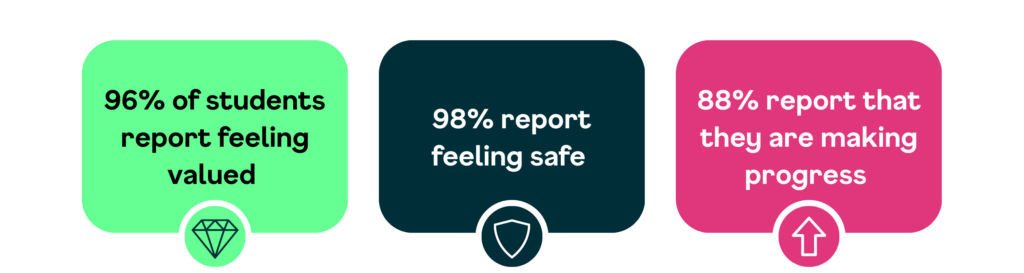
For students accessing alternative provision, these measures matter. Feeling safe and valued underpins engagement, particularly for learners with anxiety or disrupted educational histories. Perceived progress supports confidence and readiness for next steps.
A strategic part of the AP toolkit
Online alternative provision works for different reasons for different students. For some, it is genuinely short term, supporting reintegration once barriers reduce. For others, particularly students with more complex needs, longer-term online provision may be appropriate and effective.
What matters is not duration, but fit.
Increasingly, partners are recognising that online alternative provision works best when it sits alongside other options rather than replacing them. It becomes one part of a broader alternative provision toolkit, used strategically rather than reactively.
At Tute, this partnership approach means clarity around purpose, regular review, and early consideration of next steps. As a result, the majority of students who complete their programme do not remain indefinitely in alternative provision. Around 80% of students withdrawn from provision go on to reintegrate into an educational setting, including schools, colleges, or other planned pathways.
Online alternative provision does not need to be permanent to be effective. It needs to be intentional, well-supported, and used as part of a wider strategy to meet complex need.

written by Kate McCombe
Head of Partner Engagement